
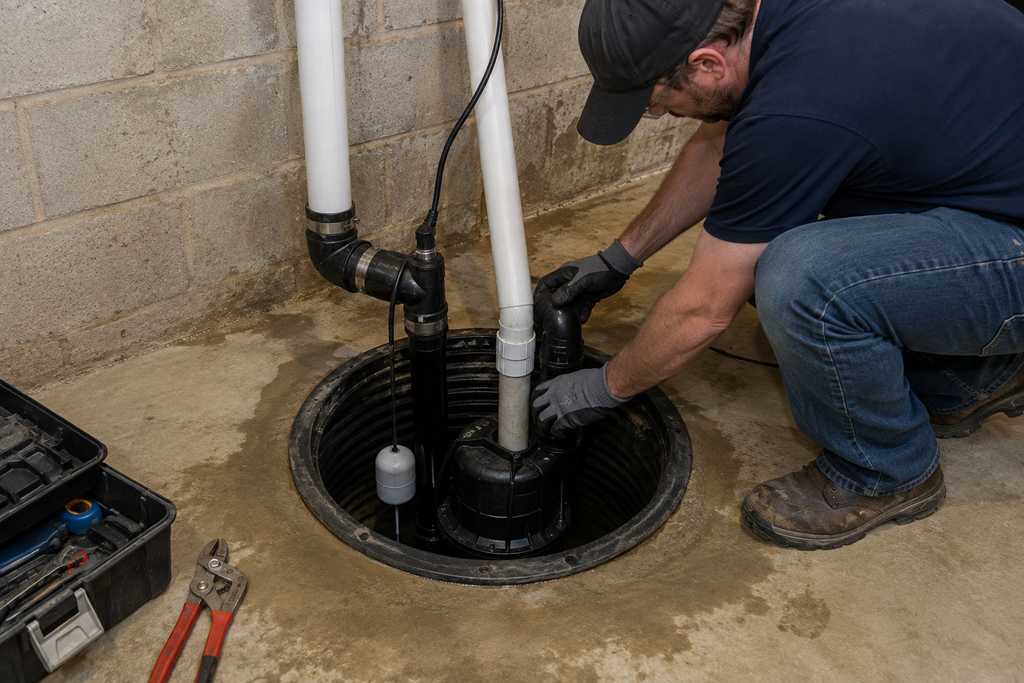
Sump Pump Installation in Sioux Falls, SD
Helping Protect Your Basement From Water Problems
A sump pump can play an important role in managing groundwater and helping reduce the risk of basement flooding. When water collects beneath or around a home’s foundation, a properly designed drainage system can direct that water toward a sump basin, where the pump moves it away from the home.
For many homes, a sump pump is one part of a broader approach to managing basement moisture and water intrusion. Understanding how these systems work can help homeowners recognize when installation, replacement, or other improvements may be worth considering.
What Does a Sump Pump Do?
A sump pump is installed in a specially designed basin, usually located at the lowest point of a basement or crawl space.
As groundwater or water collected by an interior drainage system enters the basin, the pump activates and moves the water through a discharge line away from the foundation.
A sump pump system may help manage:
- Rising groundwater
- Water collected by interior drainage systems
- Basement flooding
- Seasonal water problems
- Excess moisture around the foundation
The effectiveness of a sump pump depends on proper installation, drainage conditions, pump capacity, and the overall design of the water management system.
Signs You May Need a Sump Pump
Not every basement requires a sump pump, but certain conditions may indicate that a water management system should be considered.
Common signs include:
- Recurring basement flooding
- Water entering after heavy rainfall
- A consistently damp basement
- Water collecting near basement walls or floors
- High groundwater levels
- An existing sump pump that no longer operates properly
- Frequent moisture problems during certain seasons
- Water problems following snowmelt
- An interior drainage system without an effective discharge system
If water problems occur repeatedly, identifying where the water is coming from is an important first step.
Sump Pump Installation Considerations
Installing a sump pump involves more than simply placing a pump in the basement. The system must be designed to collect water effectively and discharge it safely away from the home.
Important considerations may include:
Sump Basin Location
The sump basin is typically located where water naturally collects or where an interior drainage system directs water.
Pump Capacity
Different pumps are designed to move different amounts of water. The appropriate capacity depends on the home’s drainage conditions and the volume of water the system may need to handle.
Discharge Line
Water removed by the pump must be directed away from the home’s foundation. The location and design of the discharge system can affect how effectively water is managed.
Check Valves
A check valve can help prevent water from flowing backward into the sump basin after the pump shuts off.
Backup Power
Power outages can occur during severe storms, which may also be when a sump pump is needed most. Backup systems may help provide additional protection when the primary pump cannot operate.
Replacing an Existing Sump Pump
Like other mechanical equipment, sump pumps can wear out over time.
Signs that an existing sump pump may need attention include:
- The pump runs continuously
- The pump fails to activate
- Unusual noises or vibration
- Frequent cycling
- Water remaining in the basin
- Visible damage or corrosion
- A history of repeated basement flooding despite having a pump
A sump pump that is not operating properly may leave a home more vulnerable to water intrusion.
Sump Pumps and Interior Drainage Systems
In many basement waterproofing systems, the sump pump works together with interior drainage.
Water entering around the foundation can be collected by a drainage system and directed toward the sump basin. The sump pump then moves the collected water away from the home.
This means that the sump pump may be only one part of the overall solution.
Explore Interior Drainage Systems →
Explore Basement Waterproofing →
Why Proper Water Management Matters
Water that repeatedly collects around or beneath a foundation can contribute to ongoing basement moisture problems.
Depending on the conditions, unmanaged water may lead to:
- Basement flooding
- Damp walls and floors
- Mold and mildew growth
- Musty odors
- Damage to finished basement spaces
- Damage to stored belongings
- Increased indoor humidity
Managing the water effectively can be an important part of protecting the basement and maintaining a healthier living environment.
Choosing the Right Sump Pump Solution
The right sump pump system depends on the specific conditions affecting the home.
Factors that may be considered include:
- The source of the water
- The amount of water entering the system
- Existing drainage conditions
- Basement or crawl space layout
- The need for backup power
- The location of the discharge line
- Whether additional waterproofing or drainage improvements are needed
Understanding the overall water problem can help determine whether a sump pump alone is appropriate or whether it should be part of a more complete waterproofing system.
Frequently Asked Questions About Sump Pump Installation
Does every home need a sump pump?
No. Whether a sump pump is appropriate depends on factors such as groundwater conditions, drainage, basement design, and the history of water problems.
How does a sump pump help prevent basement flooding?
A sump pump collects water in a sump basin and pumps it away from the home’s foundation. It is often used in combination with interior drainage systems that direct water toward the basin.
How long does a sump pump last?
The lifespan of a sump pump can vary depending on the type of pump, how often it operates, maintenance, and the conditions in which it is used.
What happens if the power goes out?
A standard sump pump requires electricity. Backup systems may be available to provide additional protection during a power outage.
Can a sump pump solve every basement water problem?
Not necessarily. A sump pump can be an important part of water management, but foundation cracks, poor drainage, and other sources of water intrusion may require additional solutions.
Explore Your Options for Managing Basement Water
Recurring basement water problems can have several possible causes. A sump pump may be part of the solution, particularly when groundwater or an interior drainage system is contributing to the problem.
Understanding how sump pumps, drainage systems, and other waterproofing methods work together can help you make a more informed decision about protecting your home.
To determine if you need a building permit for your basement waterproofing project, visit the City of Sioux Falls Building Inspections website.
For more information about basement waterproofing, visit our Home page.
