Crawl Space Waterproofing in Sioux Falls, SD
Protecting Your Home From Moisture Below
A crawl space may be out of sight, but moisture problems below a home can affect the entire structure. Water, excess humidity, and persistent dampness can contribute to musty odors, mold and mildew growth, wood deterioration, and increased humidity inside the home.
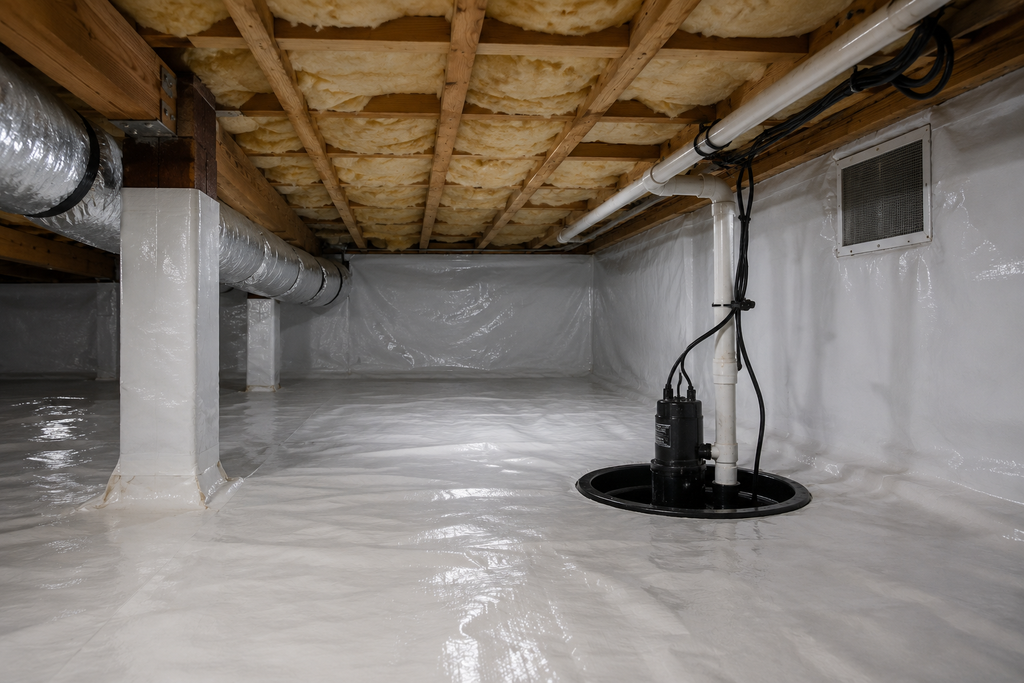
Crawl space waterproofing focuses on managing water and moisture beneath the home. Depending on the conditions, solutions may include drainage improvements, vapor barriers, sump pump systems, encapsulation, and other methods designed to help control moisture.
Understanding the source of the problem is an important first step toward choosing the right approach.
Signs You May Have a Crawl Space Moisture Problem
Moisture problems are not always immediately visible from inside the home. However, several warning signs may indicate that excess moisture is present in the crawl space.
Common signs include:
- Musty odors inside the home
- Damp or wet soil in the crawl space
- Standing water
- Visible mold or mildew
- Condensation on pipes or other surfaces
- High indoor humidity
- Damp insulation
- Wood that appears wet or deteriorated
- Pest activity associated with damp conditions
- Persistent moisture after rainfall
Because crawl spaces are often difficult to access, problems can continue for long periods before they are discovered.
Common Causes of Crawl Space Moisture
Several conditions can contribute to water and humidity problems beneath a home.
Groundwater and Standing Water
Groundwater can enter a crawl space through the surrounding soil, particularly during periods of heavy rain or rising water levels.
Poor Exterior Drainage
Water that collects around the foundation can eventually find its way beneath the home. Improper grading, overflowing gutters, and poorly positioned downspouts can all contribute to the problem.
High Humidity
Warm, humid air entering the crawl space can create condensation when it contacts cooler surfaces.
Plumbing Leaks
Leaks from water supply or drainage pipes can introduce moisture into the crawl space.
Inadequate Moisture Protection
Older homes may have little or no protection against moisture rising from the ground.
Crawl Space Waterproofing Solutions
The appropriate solution depends on where the moisture is coming from and how severe the problem has become.
Vapor Barriers
A vapor barrier is installed over the crawl space floor to help reduce moisture rising from the soil.
The material creates a barrier between the ground and the crawl space environment, helping reduce humidity and moisture exposure.
Crawl Space Encapsulation
Encapsulation involves covering the crawl space floor and, in some cases, foundation walls with a durable moisture barrier.
The goal is to create a more controlled environment and reduce the amount of moisture entering the crawl space.
Interior Drainage
When water enters the crawl space, an interior drainage system may help collect and direct it toward an appropriate drainage point.
Explore Interior Drainage Systems →
Sump Pump Systems
A sump pump may be used when groundwater or recurring water intrusion collects beneath the home. Water can be directed toward a sump basin and pumped away from the foundation.
Explore Sump Pump Installation →
Moisture Control
Additional moisture control measures may be considered depending on humidity levels, ventilation, and the specific conditions inside the crawl space.
Why Crawl Space Moisture Should Not Be Ignored
Persistent moisture beneath a home can contribute to problems that extend beyond the crawl space itself.
Over time, excess moisture may contribute to:
- Mold and mildew growth
- Musty odors
- Increased indoor humidity
- Deterioration of wood materials
- Damage to insulation
- Pest problems
- Reduced comfort inside the home
Addressing the source of moisture can help protect the crawl space and improve conditions throughout the home.
Crawl Space Waterproofing and the Rest of Your Home
Water and moisture problems often affect more than one area.
For example, poor drainage around the foundation may contribute to both basement and crawl space moisture. Likewise, groundwater problems may require a combination of drainage and sump pump systems.
Depending on the home, crawl space waterproofing may be considered alongside:
Understanding how these systems work together can help homeowners explore a more complete approach to managing water and moisture.
Choosing the Right Crawl Space Solution
There is no single solution for every crawl space.
The appropriate approach may depend on:
- Whether standing water is present
- The source of the moisture
- Soil and groundwater conditions
- Existing drainage around the home
- Humidity levels
- The condition of insulation and structural materials
- Whether a vapor barrier is already installed
- Whether a sump pump or drainage system is needed
A thorough evaluation of the crawl space conditions can help determine which options may be appropriate.
Frequently Asked Questions About Crawl Space Waterproofing
What is crawl space waterproofing?
Crawl space waterproofing refers to methods used to manage water and moisture beneath a home. Depending on the conditions, this may include vapor barriers, drainage systems, sump pumps, encapsulation, and other moisture-control measures.
What is the difference between a vapor barrier and crawl space encapsulation?
A vapor barrier typically covers the crawl space floor to reduce moisture rising from the ground. Encapsulation is a more comprehensive approach that may also include covering foundation walls and sealing the crawl space environment.
Can a crawl space have mold?
Yes. Persistent moisture and high humidity can create conditions that support mold and mildew growth.
Can poor drainage cause crawl space moisture?
Yes. Water collecting around the home’s foundation can contribute to moisture or standing water beneath the home.
Does every crawl space need a sump pump?
No. A sump pump may be appropriate when groundwater or recurring water intrusion creates standing water or persistent moisture problems.
Explore Your Options for a Drier Crawl Space
A damp crawl space can contribute to moisture problems throughout a home. Understanding the source of the water or humidity and exploring the available solutions can help homeowners make more informed decisions about protecting their property.
To see if a building permit is required for your project, see the City of Sioux Falls Building Inspections website.
For more information on basement waterproofing, see our Home page.
