
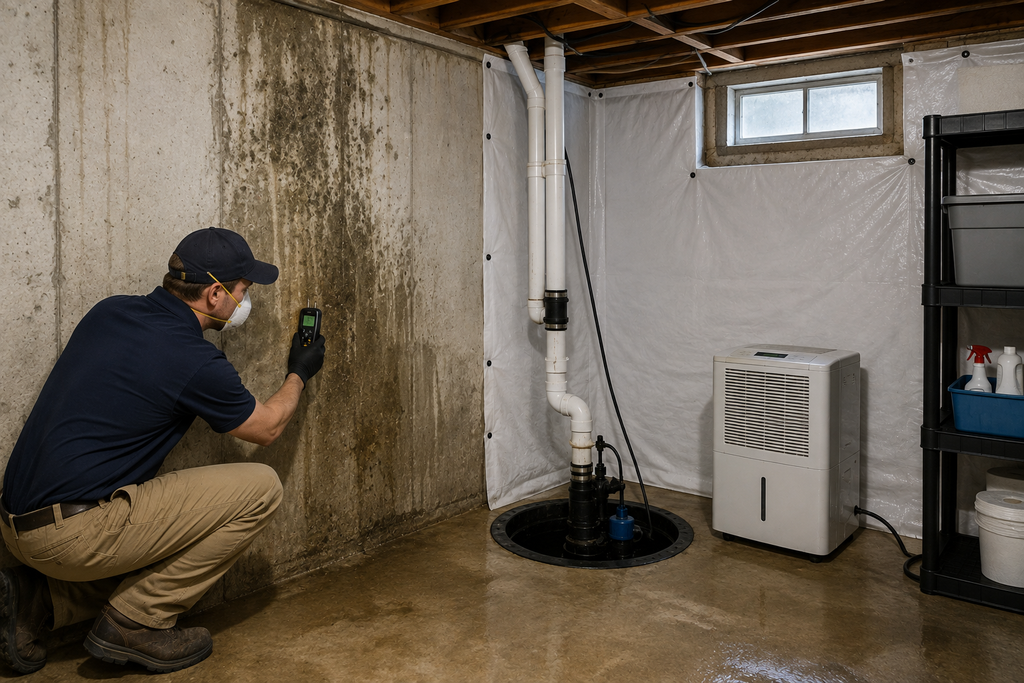
Basement Moisture and Mold Control in Sioux Falls, SD
Understanding Moisture Problems Before They Get Worse
A damp basement can create more than an unpleasant environment. Persistent moisture may contribute to musty odors, mold and mildew growth, damage to walls and flooring, and increased humidity throughout the home.
Controlling basement moisture begins with understanding where the water or humidity is coming from. In some homes, the problem may be caused by water entering through foundation cracks or joints. In others, groundwater, poor drainage, plumbing leaks, or high humidity may be contributing to the conditions.
Identifying the source of the moisture is an important first step toward exploring the available solutions.
Common Signs of Basement Moisture Problems
Moisture is not always visible as standing water. Some problems develop gradually and may go unnoticed until odors, stains, or mold become more apparent.
Common warning signs include:
- Musty or damp odors
- Visible mold or mildew
- Damp basement walls
- Condensation on pipes or windows
- Peeling paint
- Water stains
- White, chalky deposits on concrete walls
- Damp carpeting or flooring
- High humidity
- Warped or damaged building materials
- Recurring moisture after rainfall
Even when there is no visible flooding, persistent dampness can indicate an underlying water or humidity problem.
Common Causes of Basement Moisture
Several conditions can contribute to excess moisture in a basement.
Water Intrusion
Water can enter through foundation cracks, wall and floor joints, or other openings in the basement structure.
Explore Foundation Crack Repair →
Groundwater and Hydrostatic Pressure
When groundwater builds up around a foundation, pressure can force water through vulnerable areas of basement walls and floors.
An interior drainage system may help collect and manage this water.
Explore Interior Drainage Systems →
Poor Exterior Drainage
Water should flow away from the home’s foundation. Improper grading, clogged gutters, or downspouts that discharge too close to the house can allow water to accumulate near the foundation.
Plumbing Leaks
A slow leak from a water supply line, drain, or appliance can introduce moisture into the basement and create conditions that may support mold growth.
High Humidity and Condensation
Warm, humid air can condense when it comes into contact with cooler basement walls, pipes, or other surfaces. Over time, repeated condensation can contribute to dampness and mold concerns.
Understanding Mold in a Basement
Mold and mildew can develop when moisture remains present for extended periods. Basements can be particularly vulnerable because they are often cooler, less ventilated, and more likely to experience water or humidity problems.
Visible mold should not simply be covered or painted over without addressing the moisture that allowed it to develop.
Controlling the underlying source of moisture is an important part of preventing recurring problems.
Options for Managing Basement Moisture
The appropriate solution depends on the source and severity of the moisture problem.
Addressing Water Intrusion
When water enters through cracks, joints, or other openings, repairing the source of the intrusion may be part of the solution.
Explore Basement Waterproofing →
Interior Drainage Systems
When groundwater or water pressure around the foundation contributes to recurring moisture, an interior drainage system may help collect and redirect the water.
Sump Pump Systems
A sump pump can help remove water collected by an interior drainage system or groundwater management system.
Explore Sump Pump Installation →
Humidity Control
Reducing excess humidity may help improve basement conditions and reduce condensation. Depending on the situation, moisture-control equipment and improvements to the basement environment may be considered.
Mold Remediation
If significant mold growth is present, specialized evaluation or remediation may be appropriate. The moisture source should also be addressed to help reduce the likelihood of recurring growth.
Why Controlling Moisture Matters
Ignoring a persistent moisture problem can allow conditions to worsen over time.
Excess moisture may contribute to:
- Mold and mildew growth
- Musty odors
- Damage to drywall and flooring
- Damage to stored belongings
- Increased indoor humidity
- Peeling paint and deteriorating finishes
- A less comfortable living environment
Addressing the source of moisture can help protect the basement and reduce the likelihood of recurring problems.
A Whole-System Approach to Basement Moisture
Basement moisture problems are not always caused by a single issue. In some cases, several conditions may be contributing at the same time.
For example, poor drainage around the home may increase groundwater pressure, while a foundation crack provides a pathway for water to enter the basement.
Depending on the situation, addressing the problem may involve a combination of:
- Basement waterproofing
- Foundation crack repair
- Interior drainage
- Sump pump systems
- Improvements to water management around the home
- Humidity control
Understanding how these conditions work together can help homeowners explore the available options.
Frequently Asked Questions About Basement Moisture and Mold Control
Can a basement have a moisture problem without visible water?
Yes. Moisture may appear as damp walls, condensation, musty odors, high humidity, or visible mold and mildew without producing standing water.
Does mold always mean there is a leak?
Not necessarily. Mold can develop when excess moisture is present. The source may be a plumbing leak, groundwater intrusion, high humidity, condensation, or another moisture-related condition.
Will a dehumidifier solve a basement moisture problem?
A dehumidifier may help reduce humidity, but it may not address the underlying source if water is entering through the foundation or another structural opening.
Can waterproofing help with mold problems?
Waterproofing may help address moisture caused by water intrusion. However, the appropriate approach depends on the source of the moisture, and existing mold may require separate evaluation or remediation.
How can I tell where basement moisture is coming from?
Observing when and where moisture appears can provide useful clues. Moisture that develops after rainfall may have a different cause than condensation or a plumbing leak.
Explore Options for a Drier, Healthier Basement
Persistent basement moisture should not be ignored. Understanding what is contributing to the problem can help homeowners explore options for managing water, reducing humidity, and improving basement conditions.
To see if your project requires a building permit, visit the City of Sioux Falls Building Inspections website.
For more information on basement waterproofing, see our Home page.
