
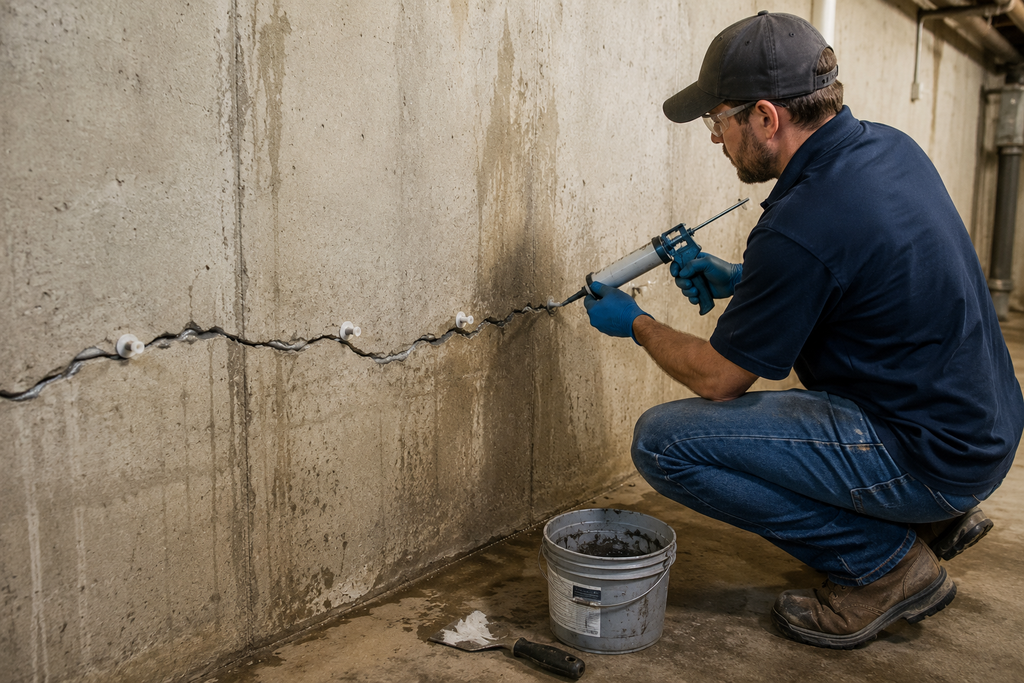
Foundation Crack Repair in Sioux Falls, SD
Understanding Foundation Cracks and Water Intrusion
Foundation cracks can be concerning for any homeowner. While some cracks may be relatively minor, others can allow water and moisture to enter the basement or may indicate movement that should be evaluated more closely.
Cracks can develop in foundation walls and floors for a variety of reasons, including settling, changes in soil conditions, water pressure around the foundation, and normal expansion and contraction of building materials.
If you have noticed a crack in your basement wall or foundation, understanding the type of crack and whether it is allowing water into your home is an important first step.
Common Types of Foundation Cracks
Foundation cracks can appear in different shapes, sizes, and locations. Their appearance can provide useful information about possible causes and whether further evaluation may be needed.
Vertical Cracks
Vertical cracks are common in concrete foundation walls. Some may develop as concrete cures or as a home settles over time.
However, even relatively narrow vertical cracks can allow water to enter the basement.
Horizontal Cracks
Horizontal cracks may develop when pressure from the surrounding soil places stress on foundation walls. These cracks can be more concerning and may warrant professional evaluation.
Diagonal Cracks
Diagonal cracks can occur when different areas of a foundation settle at different rates or when soil movement creates uneven pressure.
Stair-Step Cracks
Stair-step cracks are commonly found in block or masonry foundations. They follow the mortar joints between blocks and may be associated with settlement or movement.
Floor Cracks
Cracks can also develop in basement floors. While some may be the result of normal concrete shrinkage, others can allow groundwater or moisture to enter the basement.
Signs a Foundation Crack May Need Attention
Not every foundation crack means there is a serious structural problem. However, certain signs may indicate that further evaluation is appropriate.
Watch for:
- Water entering through a crack
- Dampness or staining around the crack
- A crack that appears to be getting wider or longer
- Multiple cracks in the same area
- Horizontal cracks in foundation walls
- Bowing or movement in a basement wall
- Stair-step cracks in block foundations
- Cracks accompanied by water problems after rainfall
Recurring moisture around a foundation crack can also contribute to mold, mildew, and damage to finished basement materials.
Foundation Crack Repair Options
The appropriate repair method depends on the type of foundation, the location and condition of the crack, and whether the crack is primarily allowing water intrusion or is associated with structural movement.
Crack Injection
Certain cracks can be sealed using injection methods designed to fill the crack and help prevent water from entering through the damaged area.
Different materials and repair methods may be used depending on the conditions and purpose of the repair.
Surface Sealing
In some situations, sealing the surface of a crack may help reduce moisture intrusion. However, surface treatments alone may not address the underlying cause of a recurring water problem.
Structural Evaluation and Repair
Cracks associated with significant movement, bowing walls, or other structural concerns may require a more comprehensive evaluation and repair approach.
The appropriate solution depends on the specific conditions affecting the foundation.
Waterproofing and Drainage Improvements
When water is contributing to the problem, crack repair may be only one part of the solution. Interior drainage, sump pump systems, or improvements to water management around the foundation may also be considered.
Explore Basement Waterproofing →
Explore Interior Drainage Systems →
What Causes Foundation Cracks?
Foundation cracks can develop for several reasons. Understanding possible causes can help homeowners better evaluate their situation.
Soil Movement
Soil expands, contracts, settles, and shifts over time. Changes in soil conditions can place pressure on foundation walls.
Water Around the Foundation
Water that collects around a foundation can increase pressure against basement walls and may contribute to water intrusion through existing cracks.
Settling
Some settling can occur as a home ages. Uneven settling may contribute to certain types of cracks.
Concrete Shrinkage
Concrete naturally shrinks as it cures. This can result in cracks that may not necessarily indicate significant structural movement.
Freeze and Thaw Conditions
In colder climates, seasonal freezing and thawing can affect soil movement and drainage conditions around a home’s foundation.
Why It Is Important to Address Water Intrusion
Even when a foundation crack is not associated with a major structural concern, water entering through the crack can create additional problems inside the home.
Persistent moisture may contribute to:
- Damp basement walls
- Mold and mildew growth
- Musty odors
- Damage to finished basement materials
- Increased humidity
- Damage to stored belongings
Addressing recurring water intrusion can help protect the basement and reduce the risk of additional moisture-related problems.
Choosing the Right Approach
The right approach to foundation crack repair depends on more than simply filling a visible crack.
Important considerations may include:
- The type and direction of the crack
- Whether the crack is changing over time
- Whether water is entering the basement
- The condition of the surrounding foundation wall
- Soil and drainage conditions around the home
- Whether there are signs of structural movement
Understanding these factors can help determine what type of repair or additional waterproofing measures may be appropriate.
Frequently Asked Questions About Foundation Crack Repair
Are all foundation cracks serious?
No. Some cracks can occur as concrete cures or as a home experiences normal settling. However, cracks that allow water intrusion, become larger, or are accompanied by wall movement may require further evaluation.
Can a foundation crack cause basement leaks?
Yes. Even relatively small cracks can create a pathway for water and moisture to enter a basement.
Should I repair a crack if it is not leaking?
The appropriate response depends on the type, location, and condition of the crack. Monitoring changes and understanding the cause can help determine whether repair is appropriate.
What type of foundation crack is most concerning?
Horizontal cracks, significant stair-step cracks, cracks associated with bowing walls, or cracks that continue to change may warrant closer evaluation.
Can waterproofing help prevent water from entering through foundation cracks?
Waterproofing and drainage improvements may help manage water around or beneath a foundation. In some cases, crack repair and waterproofing measures may be used together.
Explore Your Foundation Repair Options
Foundation cracks should not be ignored, particularly when they are allowing water into the basement or appear to be changing over time. Understanding the type of crack, possible causes, and available repair options can help you make a more informed decision about protecting your home.
To determine if your basement waterproofing project requires a building permit, visit the City of Sioux Falls Buildings Inspections website.
For more information about basement waterproofing, visit our Home page.
