
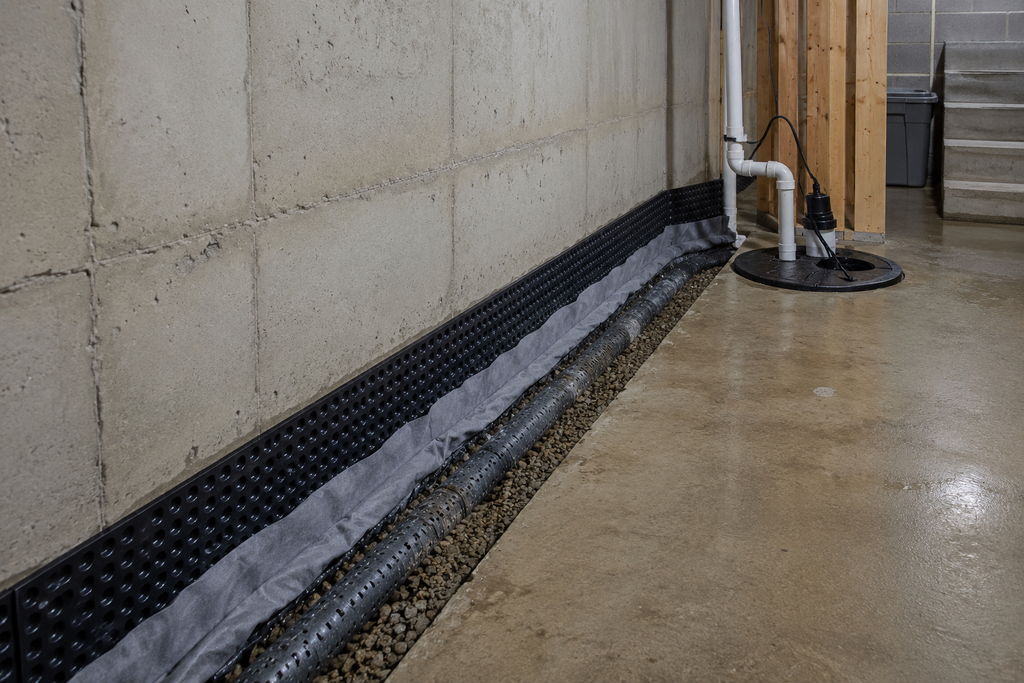
Interior Drainage Systems in Sioux Falls, SD
Managing Water Around Your Basement Foundation
When water repeatedly enters a basement, the source of the problem is not always a visible crack or opening in the wall. Groundwater and moisture can build up around the foundation and eventually find a path into the basement through joints, gaps, or other vulnerable areas.
An interior drainage system is designed to collect water entering around or beneath the foundation and direct it toward a sump basin, where it can be pumped away from the home.
For homes with recurring basement moisture or water problems, interior drainage may be one part of a broader waterproofing approach.
What Is an Interior Drainage System?
An interior drainage system is installed along the perimeter of a basement, typically near the foundation walls.
The system is designed to collect water before it spreads across the basement floor. Water entering through the foundation wall, floor joint, or surrounding soil can be directed into the drainage system and moved toward a sump basin.
From there, a sump pump can move the collected water away from the foundation.
Interior drainage systems may include:
- Perimeter drainage channels
- Drain pipe or drainage systems
- Gravel or drainage material
- Wall drainage components
- A sump basin
- A sump pump
- Discharge piping
The specific design depends on the construction of the home and the conditions contributing to the water problem.
Signs You May Need an Interior Drainage System
Recurring water problems can indicate that moisture is building up around or beneath the foundation.
Common signs include:
- Water entering where basement walls meet the floor
- Standing water after heavy rain
- Recurring basement flooding
- Dampness along the perimeter of the basement
- Water seepage that appears during certain seasons
- Persistent moisture despite sealing visible cracks
- A sump pump that receives little or no water because drainage is not reaching it
- Musty odors or high humidity caused by recurring moisture
Understanding where and when water enters the basement can help identify whether an interior drainage system may be appropriate.
How Interior Drainage Systems Work
An interior drainage system is designed to provide a controlled path for water.
1. Water Reaches the Foundation
Groundwater or surface water can build up in the soil surrounding a home’s foundation. Pressure from this water may cause moisture to enter through cracks, joints, or porous areas of the foundation.
2. Water Is Collected
Instead of allowing water to spread across the basement floor, the drainage system collects it along the perimeter of the basement.
3. Water Is Directed to a Sump Basin
The collected water is routed through the drainage system toward a sump basin.
4. The Sump Pump Removes the Water
When the water in the basin reaches a certain level, the sump pump activates and moves the water through a discharge line away from the home’s foundation.
Interior Drainage and Basement Waterproofing
Interior drainage systems are often used as part of a larger basement waterproofing strategy.
Depending on the conditions affecting the home, a complete approach may also involve:
- Sump pump installation or replacement
- Foundation crack repair
- Moisture management
- Crawl space waterproofing
- Improvements to drainage around the home
- Other methods for managing water around the foundation
An interior drainage system is designed primarily to manage water that reaches the foundation and basement. Other sources of water intrusion may require additional solutions.
Explore Basement Waterproofing →
Explore Sump Pump Installation →
Explore Foundation Crack Repair →
Common Causes of Basement Water Problems
Several conditions can contribute to water entering around or beneath a basement foundation.
Hydrostatic Pressure
When groundwater builds up in the soil around a foundation, it can create pressure against basement walls and floors. This pressure may force water through cracks, joints, and other vulnerable areas.
Poor Exterior Drainage
Improper grading, clogged gutters, or downspouts that discharge too close to the foundation can allow water to accumulate near the home.
Rising Groundwater
Seasonal changes, heavy rainfall, and snowmelt can increase groundwater levels and contribute to basement water problems.
Foundation Joints and Gaps
Water can enter where the basement wall meets the floor or through other joints and openings in the foundation.
Existing Cracks
Foundation cracks can create a direct pathway for water and moisture to enter the basement.
Why Managing Water Matters
Recurring basement moisture can create more than a temporary inconvenience.
Over time, water problems may contribute to:
- Damage to finished basement areas
- Mold and mildew growth
- Musty odors
- Damage to flooring and wall materials
- Increased humidity
- Damage to furniture and stored belongings
Managing the water before it spreads through the basement can help reduce the impact of recurring moisture problems.
Choosing the Right Interior Drainage Approach
Not every basement water problem requires the same solution.
The appropriate approach may depend on:
- Where the water is entering
- How frequently the problem occurs
- Soil and groundwater conditions
- The age and construction of the home
- Whether a sump pump is already installed
- The condition of the foundation
- Whether other drainage or waterproofing measures are needed
Understanding the cause of the water problem is an important part of determining which options may be appropriate.
Frequently Asked Questions About Interior Drainage Systems
What is the purpose of an interior drainage system?
An interior drainage system is designed to collect water entering around or beneath the foundation and direct it toward a sump basin for removal.
Does an interior drainage system require a sump pump?
Many interior drainage systems use a sump pump to remove the water collected by the system. The specific design can depend on the home’s drainage conditions.
Can interior drainage help with recurring basement flooding?
An interior drainage system may help manage recurring water intrusion by providing a controlled path for water and directing it away from the basement through an appropriate discharge system.
Is interior drainage the same as basement waterproofing?
Interior drainage can be part of a basement waterproofing strategy, but basement water problems may also involve cracks, exterior drainage issues, groundwater, or other conditions.
Can an interior drainage system be installed in a finished basement?
Installation may require access to the perimeter of the basement floor and foundation walls. The specific approach can depend on the construction and layout of the finished space.
Explore Options for Managing Basement Water
Recurring basement water problems often require more than simply cleaning up after the water appears. Understanding where the water is coming from and how it is entering the basement can help homeowners explore the options available for managing the problem.
to see if a building permit is required for your basement waterproofing project, visit the City of Sioux Falls Building Inspections website.
For more information on basement waterproofing, visit our Home page.
